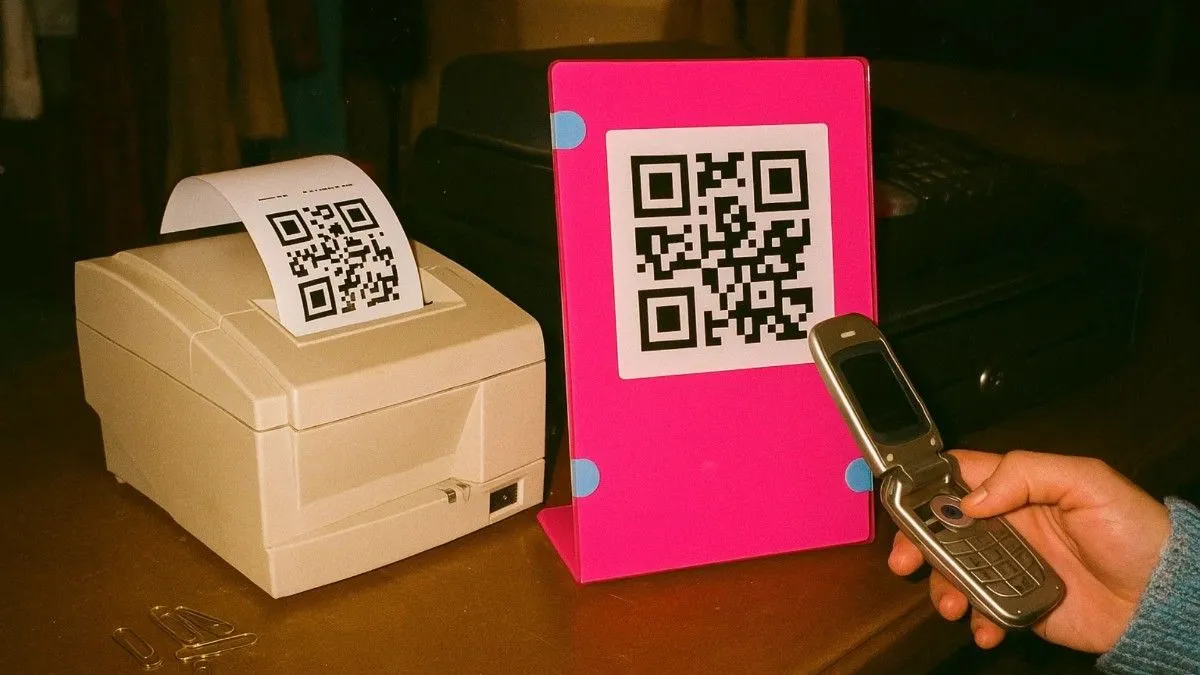
Quick answer: A POS referral program turns receipts, packaging, and in-store signage into trackable QR codes that drive new customers without adding ad spend.
Table of Contents
- Why offline referrals matter
- How a POS referral program works
- Designing scannable QR code touchpoints
- In-store scripts, incentives, and staffing
- Tracking, fraud control, and analytics
- Pilot plan, rollout, and budgeting
- Launch / Optimise Checklist
- FAQ
- Takeaways
Why offline referrals matter
Your highest-intent audience is already inside your store. Converting those happy buyers into advocates can rival online performance, since a solid retail referral program often matches the 3%–5% median conversion rate seen across eCommerce, with top programs hitting 8%+.
Weaving QR codes into receipts, bag stuffers, and countertop stands lets shoppers refer on the spot while excitement is fresh. Packaging inserts and QR codes are among the proven channels for referral promotion in 2026.
How a POS referral program works
At its core, a POS referral program connects three elements:
- A trackable asset
Generate a unique referral link and discount code for your store, then convert it into a QR code so phones can scan it in one step. If you don’t already have a tool, you can create one using Scanova’s free URL to QR code tool. Modern referral platforms record the click, attribute the order, and trigger rewards automatically. - An offline trigger
Print that QR on receipts, table tents, bag inserts, shelf wobblers, loyalty cards, product sleeves, and even staff name tags. - A simple two-sided offer
“Give 10%, Get 10%” works in-store as well as online and typically lifts click-through and conversions.
If you want to review software options later, our breakdown of the best Shopify referral apps walks through which features support QR and packaging inserts. Mention features like embedded signup forms and widgets when you evaluate the best Shopify referral apps so you can bring the same flow to retail.
Designing scannable QR code touchpoints
Use these practical design rules:
- Short destination, instant benefit. The QR should resolve to a clean landing page that auto-applies the friend’s discount and shows social proof. Auto-applied discounts reduce friction and help conversions.
- Big, high-contrast codes. Minimum 2.5 cm square on receipts, 3.5+ cm on signage. Test from arm’s length.
- Plain-language CTA. “Scan to share a discount with a friend.”
- Place where eyes go next. Countertops near card terminals, changing rooms, pickup counters, and the inside flap of shopping bags outperform back-of-store posters.
- Rotate creative quarterly. Seasonal creative plus a consistent “Give X, Get Y” keeps it fresh.
To speed execution, grab the referral program template and adapt the copy for in-store cards, bag inserts, and staff one-liners. Weave the referral program template into your marketing ops so retail teams can print on demand.
In-store scripts, incentives, and staffing
Frontline prompts make or break offline referrals. Keep it conversational and optional:
- Cashier: “I added a QR on your receipt to gift a friend 10% off. When they order, you get 10% back.”
- Fitting room associate: “If that hoodie’s a hit, this QR lets you gift a discount to a friend.”
- Pickup counter: “Scan this to share a first-order code with a friend, you’ll get store credit when they buy.”
Add a lightweight contest to spark friendly competition: highlight a monthly leaderboard on the staff room board and reward the location with the highest referred revenue. In our promotion playbook, seasonal contests and reminders re-engage dormant advocates and keep momentum up.
Tracking, fraud control, and analytics
You need clean attribution from scan to sale and confidence that rewards are legit.
- Links, codes, and attribution windows. QR codes should resolve through a referral link or campaign URL that tags traffic before redirecting, so the sale credits correctly even if the shopper switches devices. Using a platform like QRnow can simplify this process, helping you create a clear attribution window and exclude low-margin SKUs when needed.
- Auto-applied friend discount. Removing steps increases conversion and shortens checkout time for new customers.
- Fraud prevention. Look for IP overlap checks, leaked-code detection, and self-referral blocks to protect margins.
- Metrics that matter. Track share rate, click-through, conversion rate, and the revenue share driven by referrals. Benchmarks: 3%–5% median referral conversion rate, with strong programs reaching 10%–30% of revenue through referrals.
- Dashboards and A/B tests. Review funnel metrics weekly and test reward copy monthly. This cadence is part of the 2026 channel playbook.
If you want deeper reporting, build a simple view using the tracking affiliate performance guide to monitor EPC, AOV, and new-customer rate for QR-sourced traffic, exactly like you would for creators or affiliates. Use tracking affiliate performance concepts to spot which locations, shifts, or creatives send the highest-quality traffic.
Pilot plan, rollout, and budgeting
Start small, then scale with data.
- Pick two stores for a 4-week pilot.
Create at least three placements per store: countertop stand, receipt QR, and a bag stuffer. Add a post-purchase email reminding buyers to share, so you’re covering online and offline touchpoints in parallel. - Set a simple goal.
“Drive 50 referred visits per store per week” or “Generate 15 new-customer orders from QR scans in month one.” - Choose a baseline offer.
Start with 10% friend discount, 10% advocate reward, then adjust. Cash-equivalent rewards and frictionless redemption tend to lift conversion. - Instrument your data.
Create campaign tags like qr-receipt, qr-counter, and qr-bag. Track by store ID. Review weekly for share → click → conversion flow. - Budget
Printing and acrylic stands are low-cost. Your biggest “cost” is the reward, which you only pay on revenue. Referral programs remain one of the most efficient channels as ad CPMs rise, which is why many DTC teams allocate more budget to referral and affiliate platforms in 2025. - Roll out.
Once a store exceeds your target for two consecutive weeks, ship the same kit to five more stores and repeat.
Along the way, it helps to sanity-check your setup against our best Shopify referral apps article to make sure features like embedded signup forms, post-purchase popups, and fraud detection map to your POS environment. Use best Shopify referral apps comparisons to confirm your platform supports QR workflows end-to-end.
Where ReferralCandy fits for offline
ReferralCandy lets you run both referrals and affiliates in one dashboard, so your in-store QR codes and your creator links share the same reporting, fraud filters, and payout rules.
You can configure double-sided rewards, auto-apply friend discounts, segment by store, and monitor performance weekly without juggling separate tools. If you are already using ReferralCandy online, adding QR code referrals is simply another share channel that plugs into your existing flows.
If you are standardising your blog assets, reference the referral program template to keep messaging consistent across bag inserts, counter cards, and landing pages. Use the referral program template to speed local store printing with pre-approved copy blocks.
Launch / Optimise Checklist
- Create a unique referral link and discount code, then convert to QR for qr-counter, qr-receipt, and qr-bag.
- Add a mobile-optimised landing page that auto-applies the friend discount.
- Train staff with one-line prompts and place acrylic stands at checkout and pickup points.
- Print bag stuffers and add QR to receipts and order pickup slips.
- Set fraud rules to block self-referrals and leaked codes in ReferralCandy.
- Review share → click → conversion and adjust rewards after 2 weeks. Benchmarks help interpret results.
- Optional: Trigger a post-purchase email reminding buyers to share, using the referral program template to keep copy tight.
FAQ
How do QR code referrals attribute correctly if shoppers switch devices later?
When a shopper scans your QR, route them through a trackable referral link before redirecting to your landing page. The platform drops the necessary identifier to credit the order within your attribution window, even if the visitor later completes checkout on another device. Set a sensible window and exclude low-margin SKUs for safety. This mirrors how online referral tracking works with links and discount codes, only the entry point is a scan.
What offer structure converts best for POS referral programs?
Start with a double-sided reward. Give the friend a straightforward first-order discount and give the advocate a cash-equivalent perk or store credit when that order completes. In 2025 data, two-sided offers and frictionless redemption increase click-through and conversion, especially when the discount is auto-applied on landing. Use benchmarks of 3%–5% conversion as your early target, then test up from there.
How do I prevent coupon abuse with QR codes on printed materials?
Enable self-referral checks, IP and device fingerprinting, and leaked-code detection in your referral platform. Limit one code redemption per customer and make the advocate reward contingent on new-customer purchases. These safeguards are standard in modern tools and are critical for printed QR assets that might circulate beyond your stores.
What should I measure weekly to see if offline referrals are working?
Watch the funnel: share rate (how many scans), click-through from scan to landing, conversion rate, and referred revenue share. Add EPC and AOV to see quality and profitability. Compare your store locations and placements, then iterate on copy and positioning. Use our tracking affiliate performance guide to build a simple dashboard your ops team can review every Monday.
Takeaways
- A POS referral program turns receipts, bag stuffers, in-store signage, and counters into acquisition channels with QR codes.
- Double-sided offers and auto-applied discounts reduce friction and lift conversions.
- Use fraud tools and weekly dashboards to protect margin and scale smart.
- ReferralCandy supports both offline and online flows in one place, so retail and eCommerce teams can track referrals together.